A Glass Half-Full…. of Flour

A Glass Half-Full…. of Flour

It’s January, the month of ‘New Me’s’, ‘New Resolutions’ and ‘New Beginnings’ which all encompass the big theme of ‘change’. But rather than thinking about personal change, we should start thinking about global change, and yes I hear the eye roles, but I feel we can take some of our newly developed behaviours from last year into this year. 

Now you might be thinking, umm what? Why would we want to continue on with how things worked last year? But one thing that has become clear thanks to the coronavirus Pandemic starting last year and continuing this year for many countries, was that in order to survive, we need to be adaptable.

March in 2020 looked at lot different than many of us expected. Some of the most noticeable changes came from supermarkets. Firstly, people stockpiled everything, which then lead us to the inevitable second observation: items quickly became unavailable and out of stock. 

Let’s first explain point 1: The Psychology behind Consumer Stockpiling! 

How did we end up in a situation where toilet roll became the new currency. It didn’t take very long before it felt like you’d have to go on the black market to get a couple of rolls. Even my mum rang me at the beginning of March to warn me to get some toilet roll:

Me: “I’m fine I still have a packet, I don’t need to go out to get any”

Mum: “Yes but your father went to the shops the other day and things are getting low in stock”

Me: “Mum I’m fine don’t worry I won’t be out of any loo rolls”

Mum: “Well we have some I can send it up in the post”

Me: “aha don’t be silly I think I’ll be fine”

….  a few weeks and a trip to the supermarket later, I sadly admitted that my mum was right and there I stood looking at the empty shelves where loo roll once stood. But as most students know, we are always adaptable and after some brief negotiations with my roommate, a tub of hummus was exchanged for one loo roll and all was good. 

So what happened? Why was there this sudden appearance of empty shelves and lack of common goods. Consumers stockpiling can be explained through the ‘Commodity Theory’. This theory proposes that the value of a product is positively related to its scarcity, thus the idea that when you can’t get an item ‘you want it more’, stimulating stockpiling behaviour.

Consumer stockpiling can also be explained using ‘Prospect Theory’, this is a theory of decision making which attempts to explain how peoples decisions are influenced by their attitude towards risk, uncertainty, loss and gain. The theory suggests that people are unable to accurately evaluate probabilities correctly and are largely motivated by a strong fear of loss. In order to avoid potential losses in the face of uncertainty, we inevitability end up in a situation where consumer’s stockpile (well, more like hoard) essential items.

Now how does that affect point 2: Consequences of Consumer Stockpiling! 

Consumer stockpiling has immediate affects on retailers, but unlike more predictable environmental emergencies, the coronavirus pandemic led to widespread shortages, which left the supermarkets scarce of many things, not just toilet roll. Another product which was noticeably sparse was flour. Now if you got into the avid baking phase of lockdown you’d know that finding that last, elusive bag of flour gave you that same exciting rush that gold miners must feel when they find a nugget. 
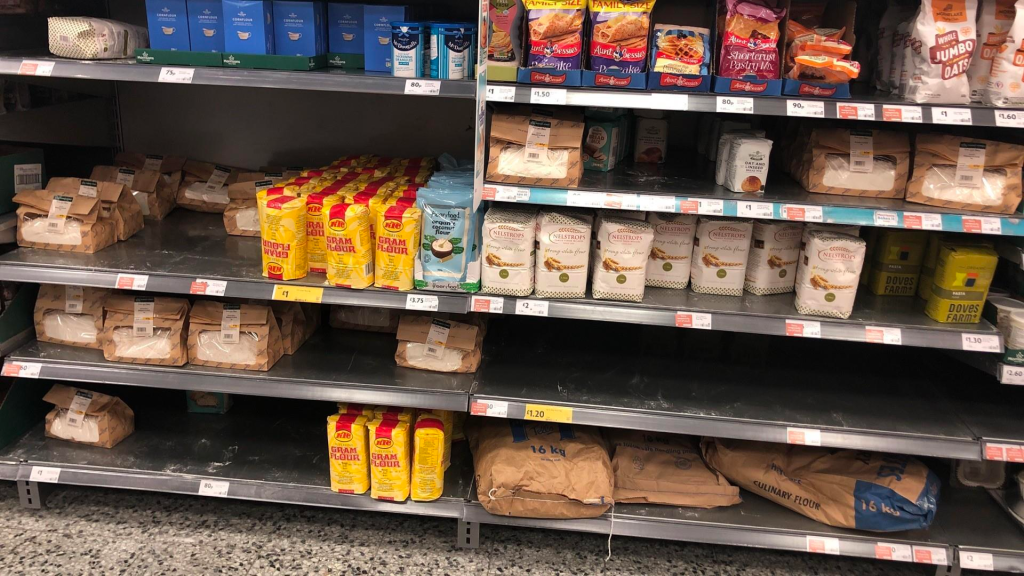
But on a hopeful note, we as a society adapted, and supermarkets soon began packaging up their flour in nonstandard packaging, with one retailer using the packaging that they use for doughnuts. This may seem odd to be hopefully about, but this small introduction allows the idea that people will adapt to new ways of experiencing their shopping. By supermarkets selling their own, …..it shows that they can adapt when pushed, and it is likely that this small change of using their own packaging will have a knock in effect of helping reduce the excess packaging.  

Origins of Wobbins…

Origins of Wobbins…

Hello! First and foremost I wanted to start of with a big hello and thank you for stumbling upon my Blog! I hope that you will enjoy my post finding them interesting, informative and making you ask you own Wobbins questions.

With that introduction I believe the next logical thing to mention (explain) is the origins of Wobbins?

As many of the great stories start, there were three uni students sitting on sofas in their student house (sofas that have existed longer than you wish to think about, with the odd stains you hide with pillows which undoubtedly are covered in hair. As gross as that sounds if you’ve live in a house with girls you begin to learn how much hair can be shed). Now I would like to also clarify that this was also during the middle of 2020 Summer Covid Lock Down, so as you can imagine anything that was considered as normal has far gone out the figurative window that is 2020.

So as we were all sat in our living room chatting about random things, quirky ideas, those typical uni conversation where you end up going ‘how did we get here? what time is it? and damn my ass hurts from sitting in the same place for what feels like years.’

I would often ask ‘What happens if’, which often turns in ‘whap-pens’ progressing onto ‘wobbins if’. So as know how friends are they will latch onto the weird words and weird pronunciation. So when ever I said ‘what happens if ‘, they would respond back and go ‘wobbins if’. Which quickly became my catchphrase.

Okay we have finally got there, after this overly long (some may say too long urging on the lines of random ramblings of nonsense) explanation of of how one word was made.

So there we have it like how most weird creations/ ideas start they are often stem from those late conversations with friends.

Two Words that Spark Joy: Limited Edition

Two Words that Spark Joy: Limited Edition

*This Blog Post was written during my Masters Degree*

We have reached the end of our blogging adventure, and I can say that this has been one of the most enjoyable assessments that I have been faced with throughout my university experience. I have thoroughly enjoyed looking at everything consumer related, and using our knowledge to explain common themes in this consumer obsessed world.

So let’s continue on with this last blogpost, today’s topic will be all about LIMITED EDITION! Yes I have just spoken the words that will ignite severe shopaholics dreams (myself included). So why do we as consumer love the words ‘Limited Edition’? This blog will attempt to discuss three ways that explain how these words can affect consumers.

Zara Limited Edition Online Section

Language is a powerful tool! The way that marketers use language can affect how consumers will respond. One way that this is achieved is with message framing. This involves a persuasive communication strategy aimed at motivating behaviour through the appeals framed in either gains or losses. When using the words ‘limited edition’ we are talking about message framing, and in particular we are talking about loss-framed messages. Research has reported that messages that have loss appeals can shape decisions of consumers purchase intentions. So when marketers use the words ‘limited edition’, they evoke a sense of urgency and with the risk of the item never coming back it can shape consumer’s purchase intentions.

Related image
Limited Edition Gadbury Orange Flavoured Twirl

So now that we have touched the language of ‘limited edition’ and how it can increase purchase intention, what is it that encourages consumer to buy the ‘limited items’. Another reason why the phrase ‘limited edition’ causes hype amongst consumers is that it brings forth the feeling of scarcity. This can be explained by the commodity theory that deals with the psychological effect of scarcity.  Scarcity enhances the value of an object that can be possessed, is useful to the possessor or can be transferred from one person to another. The commodity theory suggests that marketers can increase the perceived value of the product by manipulating the perceiver’s scarcity of the object, such as releasing ‘limited editions’.

So we have talked about language and scarcity but what can motivate consumers on a personal level to buy a ‘limited edition’ item. This can be explained through the idea of conspicuous consumption. This is defined as the spending on or consumption of luxury items which are on a lavish scale in an attempt to enhance one’s own prestige. 

Hermès ‘Endless Road’ Limited Edition 

Purchasing a conspicuous good not only satisfies our materialistic need but also our social need to be seen as having prestige. This can explain why consumers will purchase a “limited edition’ item; they know there will only be a certain number of these items and once they are gone the product is gone. Therefore, giving the consumer a sense of self prestige knowing that they had succeeded in getting one of these ‘limited editions’ items. 

This blogpost has explained the three ways that we can use consumer psychology to understand the power the phrase ‘Limited Edition’ will have on consumer’s purchase habits. It also explained how by the use of language, scarcity, and prestige, marketers can create hype when selling ‘limited edition’ items. 

Changing the Game!

Changing the Game!

*This Blog Post was written during my Masters Degree*

For this week’s blog I have decided to talk about purpose-driven content. Purpose-driven content is the term for when marketers create an authentic campaign based on a valuable shared interest that stands up for an important cause. 

There have been many recent great examples, including Barbie’s ‘You Can Be Anything’ campaign. https://youtu.be/l1vnsqbnAkk

Barbie’s ‘You Can Be Anything’ campaign 

But I decided to talk about the more male driven campaigns which are fighting to break down male stereotypes of how men are ‘expected’ to act in order to be ‘men’. The first campaign I will mention is Lynx ‘Presents Shower and Shave ASMR Tutorials’. This campaign was released at the beginning of this year. The second campaign that I will talk about is Doves Men+Care ‘Care for every position you play’ campaign which was released in partnership with the Rugby World Cup. 

Let’s start with the Lynx ‘Shower and Shave’. If you have not seen these adverts, and need a good laugh, have a watch. The adverts wanted men to express their individuality through their hair, with three ‘shavetorials’ on how to shave their: ‘Legs’, ‘Chest’, and ‘Balls’. 

Lynx ‘Presents Shower and Shave ASMR Tutorials’ 

“I think this campaign from Chris Baur and Rachel Sato-Banks shows that guys today don’t have to be buff, or swim, or bike or have an excuse to shave themselves. They can just be regular dudes who like the comfort of being cleanly shaven on all different kinds of body parts.” The Creative Quote from the Director at 72 and Sunny Amsterdam.

So why does this style of advertising work? According to research by Cone Communications and Edelman, 79% of Americans are more loyal to purpose-driven brands, and 77% feel that they have a stronger emotional connection to the purpose-driven brand, compared to non-purpose driven brands. What I especially enjoyed about this campaign is that it has come from a brand whose main marketing theme was previously sex-oriented, but who are now using their brand to help reverse what they once were a symbol for. To keep with their purpose-driven context Lynx has now made it their mission to ‘Ditch the Label’. The shavetorials remain in line with Lynx mission to ‘Ditch the Label’ as it is breaking down those stereotypes of male body hair. 

The campaigns also used humour as a way of engaging the consumer. A meta-analysis looking at humour in adverts showed that humour enhances attitudes towards both the advert and the brand. Lynx has created a funny, entertaining campaign that has tried to break the male body hair stereotypes of how men should look, and by doing so they are trying to encourage men to express their individuality. 

The next campaign that I am going to talk about featured during the Rugby World Cup. I think i’ve spent just enough time mourning that I can now refer back to the World Cup and not be deeply gutted about that final match. Inbetween shouting at the tv, I remember going ‘Oo this is a great ad’ when Dove’s Men+Care ‘Care for every position you play’ advert was shown.

The advert featured British players including Courtney Lawes, Stuart Hogg, Peter O’Mahony and Alun Wyn Jones, who all give their take on balancing their rugby life and their home life. 

Dove’s Men+Care ‘Care for every position you play’ 

These adverts keep in line with Dove’s Men+Care purpose-driven content which aim at raising awareness for championing better paternity leave worldwide. These social media adverts have also built a connection with the consumer. This is because the brands have created social relatedness, through the joining of the paternal community.  A study explored engaging consumers and building relationships in social media, they reported that consumers who were extrinsically motivated were more enhanced by perception of high social relatedness. 

The Dove Men+Care the adverts were shown during the Rugby World Cup. Having a large male audience allows the campaign to vocalise the importance of Father’s being involved in looking after their children. That fathers don’t have​ to fit the stereotype of typical gender roles. This campaign is in line with their purpose-driven content by raising awareness for championing better paternity leave worldwide. 

Purpose-driven content can be a perfect way for a brand to vocalise their alliance with an important topic among their consumers, while also benefiting their brand perception among their consumers. Hopefully this will become a trend and we will see more adverts that are taking current trending topic and aligning with them to engage in more change in our world.

The Tail of Dogs in Advertising

The Tail of Dogs in Advertising

*This Blog Post was written during my Masters Degree*

At the start of this blogging venture I had a list of topics that I knew I wanted to write about and I have been eagerly anticipating writing this post! 

I am the crazy dog girl, if you get me talking about my dogs I won’t stop. I will have you trapped while I show you a million photos of them sleeping going ‘they are so cute, look at them!’ and will no doubtably end up just making inaudible, high pitched noises.

So now after all the rambling and the dog photos (see I told you I’d show anyone), let’s get on with this blogpost. I recently came across Subaru’s ‘Let the dogs out’ campaign, which featured a series of dog themed adverts. 

Subaru Advert One: Doggy family goes to the car wash!

Using animals is a popular theme within advertising. Companies use animals in advertising because by associating their brand with an attractive stimulus it can favourably influence the consumers liking of a brand. Here Subaru have used a Golden Retriever family because they are aware that the majority of their consumers have pets. This means that their consumers will associate positive feelings from the animals and transfer those feelings onto the brand, connecting the brand with feelings of happiness and joy. 

Subaru Advert Two: Doggy family takes a puppy to their first day of school!

Another reason why advertisers use animals in adverts is because humans have had a long association with animals, from the basic necessity of providing food to an emotional level of providing companionship. Research has looked into the symbolic role of animals in advertising, analysing the use of dogs, cats, horses and birds. They reported that dogs were the most commonly used animal to represent either durable or nondurable products. Dogs are often used to represent warm relationships or constant loyal companionship which is reflected in the advert above, showing Subaru consumers elements that they may come across in their family life. 

Subaru Advert Three: A dog learning how to parallel park!

Another successful aspect of Subaru’s dog adverts is that they are humorous. Who doesn’t enjoy watching animals doing human tasks? I certainly do! Research has found that humour is a strong emotional appeal in advertising. This is because it can attract the consumers attention which can lead to deeper levels of remembering. The Subura advert above shows the dog learning to parallel park (which even for some humans is a hard task), resulting in the dog crashing into the curve. This creates a humorous tone for the adverts which can then make it more memorable for the consumers. 

Subaru Advert Four: One of the dogs plays a car prank!

We know that advertisers use animals in adverts but what is the consumer reaction to these ads? Research has looked at how dogs in adverts can affect the way consumers form attitudes towards the advert and subsequently what are the purchase intentions. 

This research used the heuristic-systematic model to explain how individuals process information. Highly motivated individuals engage in systematic processing by making an effort to analyse and understand relevant information. Less motivated individuals use heuristic processing which is done by using mental shortcuts to understand information. The research found that if readers only evaluated the messages argument they did not find the ad appealing, but if they process the heuristic cues they enjoyed the ad more. The presence of the dog in the ad suppressed the systematic processing while increasing the heuristic processing, which lead to an increased attitude towards the ad. By having dogs present in their advert, Subaru are increasing consumer’s heuristic processing which ultimately increased consumer’s attitudes towards the adverts. 

What we can take from this post is that animals in adverts is always a win (in my opinion), that consumers can associate our feelings of the animals and then transfer them onto the brand. To end this post on a high, why not enjoy these dog bloopers Subura created!

Subaru behind the scenes!
Tit’ the Season to be Jolly!

Tit’ the Season to be Jolly!

*This Blog Post was written during my Masters Degree*

Halloween is over, so now I feel like it is perfectly socially acceptable to start talking about Christmas! You may have noticed the slow introduction of Christmas adverts on TV, or you could be thinking about what Christmas presents to buy or simply looking at what the Christmas party clothes you want to get for the festive period. 

Companies have already started with the introduction of the Christmas jumper, and one brand in particular was trending when they released this seasons womens Christmas jumper. 

FatFace Christmas Jumper

This is a Christmas jumper from FatFace’s 2019 Winter collection. You may be thinking okay cool, that’s a pretty standard Christmas jumper. But, if you are like most of us and can’t help but see the dirty side of a Christmas jumper, you may have spotted that the patterns looks like….well she has boobs going across her boobs. 

I should have apologised in advance because when you spot it, it’s hard to ‘un-see’ it. As you can imagine social media was very quick to point out this design flaw, or planned design depending if you like boobs on you jumper. 

People were quick to call FatFace out but FatFace took this in their stride and turned this blooper (boober?) into a marketing opportunity.  

FatFace’s Damage Control Twitter Post

Whoever does the marketing for FatFace needs a round of applause, because not only have they used this as free public advertising but they have now assigned 10% of the sale of the jumper to be donated to breast cancer. 

This marketing technique that was used here is covert advertising. Covert advertising is where the product is placed covertly so the consumer will observe them indirectly. This can be seen here as the intended purpose of the post was to advertise the product, but the post has a greater emphasises on the charity donation that would be given once the product is purchased. Therefore making the consumer more aware of the charitable aspect rather than the advertisement of the Christmas jumper. 

FatFace has also been clever by not only creating a campaign based on public buzz, but also by linking that jumper to a charitable campaign. If a brand holds a similar value to that of their consumers, their consumers will choose them over another brand. This means that when consumers are doing their Christmas jumper shopping, they will be more likely to purchase this FatFace jumper as they believe they have the same values as this brand. 

Lastly, not only is the jumper associated with a charitable campaign but it is also Christmas related. Christmas time often evokes goodwill, generosity and altruism, and research has shown that consumption can be driven by these feelings. FatFace happen to be in the perfect situation, where their product is Christmas themed which then consumers will often purchase more items due to feelings of goodwill. But also combined with the fact that consumption will be doing good by buying the jumper it can only encourage more sales. 

Christmas also brings on an array of emotions of  nostalgia, research has found that nostalgia increases charitable donations among consumers. This means that consumers will be more likely to buy the jumper as they will have higher feelings of nostalgia and they feel that buying the jumper is a charitable donation. 

One thing we can take from this article is that with the right post, a social media mistake provides a great tool for advertisers. One trending item can help boost a brand’s ad campaign, and that one boob related jumper can provide consumers with a feeling of goodwill! And to end on a high note check out M&S Christmas Jumper Advert!

M&S Go Jumpers For Christmas Advert
This is not just Branding, this is M&S Branding

This is not just Branding, this is M&S Branding

*This Blog Post was written during my Masters Degree*

If you haven’t just read this line in the over the top, sultry way that Dervla Kirwan (the voiceover actress) in Marks & Spencer’s (M&S) food adverts then I applaud you. Even M&S  themselves have mocked their famous ‘Food Porn’ ads, see the video below.

What is it about this advert that keeps us intrigued? But more importantly, how can I stop the voice in my head from saying everything in that slow and sultry style when I’m writing this?

So why have M&S tailored their food adverts to have a sultry appeal. We can use Maslow’s Hierarchy of needs to explain how these style of adverts can motivate consumers to go out and purchase M&S food.  We start with the fact that M&S foods adverts satisfy our basic physiological needs. As humans we are heavily influenced and motivated to get food. M&S have masterfully  utilised this approach as they want you to think of them whenever you buy food. They want to help satisfy our need for food, but while also making it clear that ‘this is not just food, this is M&S food’. They have taken what was once just a basic message, ‘I need food’, to ‘I need  M&S food’. 

Now where does the sultry voice come into play? Well we’ve all heard the phrase ‘sex sells’ but how true is it? Research that looked into sexuality in advertising reported that both gender don’t mind the use of overt sexuality as long as men and women are equally involved. In the case of M&S their food adverts do both involve men and women which can put them in favour with the consumers as research has shown that consumers can be turned off by too much sexual imagery. 

But how effective are sex appeals in advertising campaigns? A meta-analysis looked at the effects of sexual appeals on memory and found that consumers recognise adverts and can recall adverts that have sex appeal more than adverts without sex appeal. But sex appeal has no effect on consumers remembering the brand that was featured in the adverts. 

Yet M&S seem to have the balance of both being sultry but also having a slogan that will remind you of the brand. Research that looked into impact of brand image and advertisement on consumer buying behaviour found that if people are aware of the brand, have good brand perception, loyalty and association they will automatically have a stronger brand image in their minds and the brand will become part of their buying behaviour. Which can be seen in the M&S food adverts due to the slogan of ‘this is not just food, this is M&S food’. But also because their brand has a good brand perception as seen in this advert below. 

M&S have found that perfect combination of a sultry tone while still enabling them as approachable to their consumers, and while bringing some humour to their previous food adverts. 

The Power of the Influencer!

The Power of the Influencer!

*This Blog Post was written during my Masters Degree*

The way we advertise has evolved throughout history, starting with print media , advancing to televised adverts and now with the help of the internet, social media is the new frontier of advertising. None are more at the front of this new form of advertising then social influencers.

A social influencer can act as a role model and even sometimes a leader affecting the way consumers act. One such way is how and what consumers buy!

This image has an empty alt attribute; its file name is screen-shot-2019-10-17-at-17.16.23.png
Megan Ellaby a Mancunian Style Blogger.

One type of social influencers are celebrities. It has been a common trend to use celebrities to endorse new products to the everyday consumer. But with the new use of social media, we can use these celebrities in more subtle ways than simply using them in ad campaigns. We can utilise these celebrities to create new purchase habits amongst the consumers. One habit can be making sustainability more fashionable among everyday consumers.

Celebrity endorsements can be a useful way of demonstrating and introducing sustainable fashion brands that the everyday consumer may not be aware of. For instance, Katie Holmes was recently seen wearing ballet shoes, you may think this isn’t particularly noteworthy, but the ballet flats she wore to Rothy’s fashion event were not your average ballet shoes. They are made from recycled single-use plastic bottles, a recurrent theme throughout their clothes, keeping in line with their ethos of putting sustainability first.

This image has an empty alt attribute; its file name is 01-katie-holmes.jpg
Katie Holmes wearing the sustainable ballet shoes at the Rothy’s Fashion event!

So why are we influenced by social influencers? One reason is that we can learn social information from them such as new buying behaviours. We may see the influencer use a particular brand which we are uncertain off, the more people who use that brand the more we observe, the more self- reinforcement we get.

The second reason is based on social needs that people have. The particular need that influencers have an impact on is the need to belong to a group, and to express their status and personality. By using a product that a social influencers uses the consumer can be portrayed as having those same extra values, which will then give them a high value of themselves and sense of belonginess. 

Using a social influencer can make the consumer feel they ‘know’ them in a personal way as if they are friends who share similar interests. The sense of similarity influencers create can therefore influence the effectiveness of the endorsement .

Research has looked at how consumer decision making is influenced by peers. Finding that peer consumption can enhance the purchase intention of the individual as they put higher value on the products. This can explain why if a consumers feel as if they ‘know’ a social influencer on a personal level, it can influence their purchasing decisions.

Social influencers are often seen as glamorous, well put together individuals, which we will assign other greater attributes to their personality due to the ‘halo effect’. If a social influencer is seen as glamorous, the consumer may also assign them other traits positive such as honestly, trustworthy, etc. These traits will then benefit the product as the consumer will believe in the product the influencer is endorsing.

But it is important for brands to carefully choose which social influencer to endorse their products with. A meta-analysis which looked at 30 years of celebrity endorsement literature, found that negative information regarding a celebrity can pass on to having a negative association with the endorsed brand.

For instance, when Pepsi had a contract with Madonna to use her ‘Like a Prayer’ single for a series of adverts. But the song had a controversial  music video, which lead to the Catholic Bishop from Texas, Rene Gracido asking for a boycott of Pepsi. The negative feedback from the music video was then transferred onto Pepsi, demonstrating that a negative information can be the passed on and associated with the brand.

This image has an empty alt attribute; its file name is madonna.jpg
Poster of Madonna ‘Like a Prayer’ world tour endorsed by Pepsi.


Yet positive information linked to celebrities can later transfer onto the endorsed brands. For instance, Rihanna became an endorser of Puma in 2016 leading to a spike in sales after she signed up for a sneakers campaign, showcasing the power a well-chosen influencer can have. That a positive association can than transfer onto the brand.

This image has an empty alt attribute; its file name is 563d11a59dd7cc10008c813e-750-563.jpg
Rihanna endorsing the products of Puma.


Social influencers are an interesting marketing tool, which if used correctly can help introduce consumers to newer or different brands. It would be interesting to see if through social influencing we can change consumer habits with how they consumer and whether it can change their buying habits to include more sustainable habits.

Sustainability is a Girl’s Best Friend!

Sustainability is a Girl’s Best Friend!

*This Blog Post was written during my Masters Degree*

There is no better time than now to talk about sustainability! You would have to have been living under a rock to have avoided the recent political talks about the environment and what we can do to help combat climate change. Consumers are becoming increasingly aware about their social responsibilities and how their own purchasing behaviour has an impact on the environment .

So what does V by Laura VannDettolAdidas , and REN Skincare have in common ? They are all aiming to be more sustainable and changing the way consumers buy! I will be using consumer psychology to discuss the companies mentioned and explain how they are shifting to a sustainable business model, through brand ethos, pricing, matching consumers values, and packaging.

First off, let’s start with V by Laura Vann. This jewellery brand’s ethos is to provide long lasting, sustainable pieces. Their recent ‘Keep’ collection was designed to be both sustainable, by using recycled silver and to make the pieces have a permanent place in your personal jewellery collection.  

The brand statement for their ‘Keep Collection’.

With the company making it their ethos to be sustainable,  they are fighting against the rising trend of throwaway ‘fast fashion’. The ‘fast fashion’ industry has adopted unsustainable production techniques to keep up with high consumer demand and the rising cost of production. This leaves a strain on both society and the environment. To counter this a new movement called ‘slow fashion’ has arrived. This incorporates social responsibility with the aim of sustainability. An exploratory study investigated the consumer perception on ‘slow fashion’. It found that consumers are slowly starting to invest in long time piece rather than the one of item.

Yet, transparency is the key to authentically communicating with the consumer about the production process of fashion items. V by Laura Vann is a perfect example, as the brand states their ethos, the consumer is therefore able to make an informed purchase decision.

The next company I will be discussing is Dettol! The first time I came across the Dettol refillable packets was in the London Underground. Three things came to mind, firstly, ‘wow what a great idea!” Secondly, ‘why have they just thought just this now?’ Thirdly, from a consumer psychology perspective how would you get buyers to incorporate these refillable packets in their shopping habits?

Dettol spray refill.

Dettol has encouraged consumers to buy the refillables by offering a reduction in price. The Dettol spray costs £2.50 (750ml) compared to the Dettol refill costs £2 (1.2L). When a consumer is able to easily calculate a discount price and the amount saved, they associate a positive response to the product Also by changing their packaging their products meet the current demand of consumers need for sustainability. Both these factors encourage consumers to buy their new products. Adidas is the second largest manufacturer in Europe, and they have partnered with Parley to create an ‘Ocean Plastic’ range of shoes and clothes. These items are created from upcycled marine plastic waste.

Photos of Adidas partnered with Parley to create ‘Ocean Plastic’ product range.

Adidas have been resourceful by creating a line of products which match up with the values of their consumers, as a consumer will choose a brand that matches similar values to their own . Having the items being created from plastic follows in line with consumer need for sustainability. This will then positively reinforce the consumer to continue shopping at Adidas as they will believe that they are buying products for a good cause and a product that matches their personal value. Adidas have firstly introduced a new product to their consumers which is sustainable sourced, but have also created a new range of  environmentally conscience consumer who will invested in products which do not damage the environment.

The last company I am going to talk about is REN Skincare. Their objective is to be a clean company; this means no waste, and no chemicals in their skincare products. Also a large part of the REN Skincare brand is that they are aiming to have their packaging 100% recyclable by 2021.

REN Skincare product range.

All of REN products clearly define how and what parts are recyclable. By having the products labelled as being recyclable it influence the consumers purchasing decision. This is an important part of REN Skincare brand which differentiates them from other skin care brands, especially as one third of consumers favoured environmentally labelled packaging. REN Skincare have created the perfect balance of using their packaging to represent both their objectives to use clean products, but also to remain clean to the environment.

Hopefully, in the next coming years there will be more companies who are aiming towards sustainable produced products.

Public Outrage, a marketers tool?

Public Outrage, a marketers tool?

*This Blog Post was written during my Masters Degree*

Welcome to my first blog post!

Recently, as I was thinking of a topic to start this blog with, the thought hit me that summer was finally over! So, as a desperate attempt to keep those summer vibes, my first blog post will be discussing the most memorable advert I saw this summer. 

The advert I will be discussing doesn’t actually have anything to do with summer, but rather it was an advert that made me do an actual double take.

I’ll set the scene, I was hastily walking along a busy train platform when, out of the corner of my eye, I caught sight of a cigarette advert. Two things ran through my brain: firstly, why is there a large advert for cigarettes and secondly, hang on a minute, this advert is sponsored by Cancer Research UK! (Advert in cover photo).

From first glance it looks exactly like a cigarette advert when, in actual fact the advert is part of a bigger campaign targeting the link between obesity and cancer. 

Cancer Research UK logo

How do non-profit and government organisations encourage new behaviours which impact the health sector? They utilise social marketing. Social marketing is a tool that aims at encouraging the general public to voluntarily comply with requirements that are important to public safety. For instance, to wear your seat belt, or to encourage healthy eating in families.

An example of social marketing

To make these campaigns successful the marketer need to put forth a message. For the obesity advert the message is for the consumer to learn that obesity (just as smoking was) is the second biggest preventable cause of cancer. 

In order for this message to have an advertising effect the message must have an appeal; these message appeals represents an attraction which aim to arouse consumer’s desires. 

The appeals can be either an rational or emotional appeal. An emotional appeal was used in these campaign because the advert is about cancer. With the advert being about cancer you are able to elicit a range of emotions, from fear, sadness, anger or hope. 

This particular advert evokes both fear and guilt, as the information depicts a severe threat that links obesity with cancer. An issue with public health adverts is that they have to strike the right balance of being fear inducing while not being manipulative

Because if a consumer feels like the advert has a manipulative intent they are less likely to feel guilty about their actions which would result in them doing the opposite of the intended outcome.  

Often guilt based advertisements also evoke feelings of anger. This advert has faced a fair amount of public anger. Certain parties have criticised the advert, arguing that it weight shames. Often when it comes to public outcry, and with the modern age of the internet, the public openly broadcast their outage which can lead to a higher amount of publicity for the advert. This, you could argue creates more publicity for the advert and generates more discussion which was the main intention of Cancer Research. 

Many felt the advert was a form of weight shaming

So do these scare tactic works? Does having these emotional appeals that elicit, fear, guilt and anger, encourage consumer to change their behaviour? Or does the public discussion we gain from these adverts help create more discussion within our society and potential change in government? 

What I have taken from this advert is that, when done well, a message appeal elicits strong emotions. It is well known that smoking causes a greater risk of cancer, but now with this advert Cancer Research are also informing the public that obesity is the second largest cause of cancer!

Whether they have done the advert in a considerate way is questionable. But have they successfully introduced a new topic of discussion into the public sphere? I think they have.